I engineer wireless biomedical systems - from custom hardware to embedded firmware and real-world validation.
PhD candidate in Electrical and Computer Engineering at NC State, in the Vazquez-Guardado Lab (ASSIST Center). My work spans battery-free NFC implants for optogenetics, Bluetooth potentiostats for electrochemical sensing, and wearable ECG/EMG front-ends.
Sense, decide and act on a living system — without wires, and often without batteries.
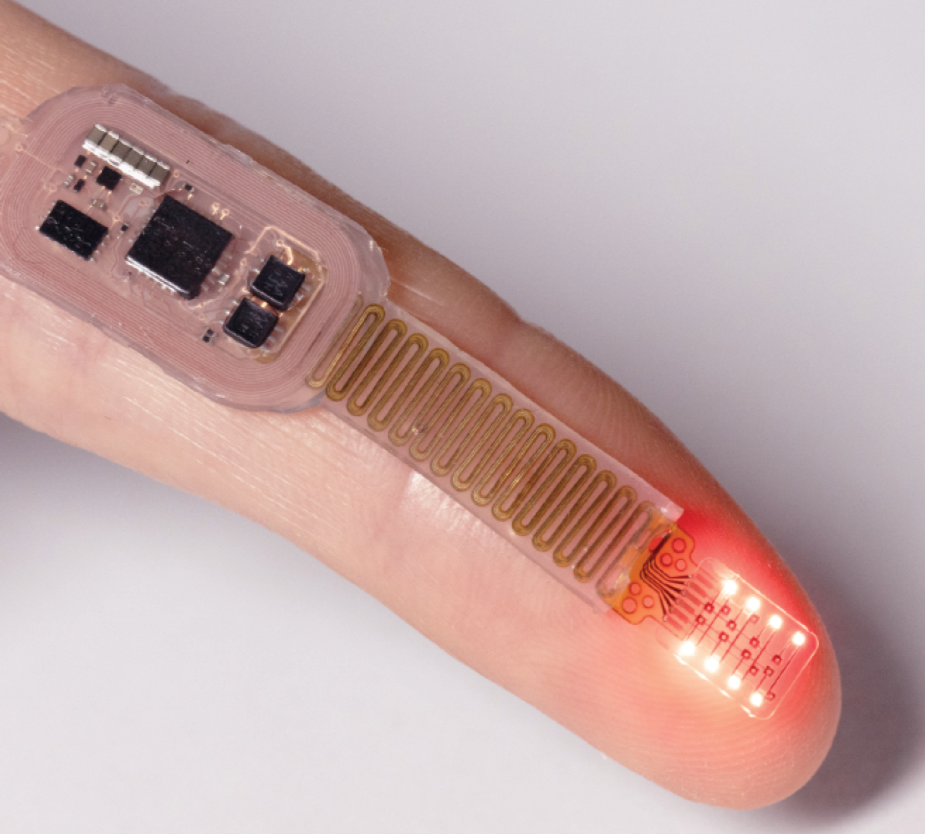
Wireless, battery-free optogenetic devices
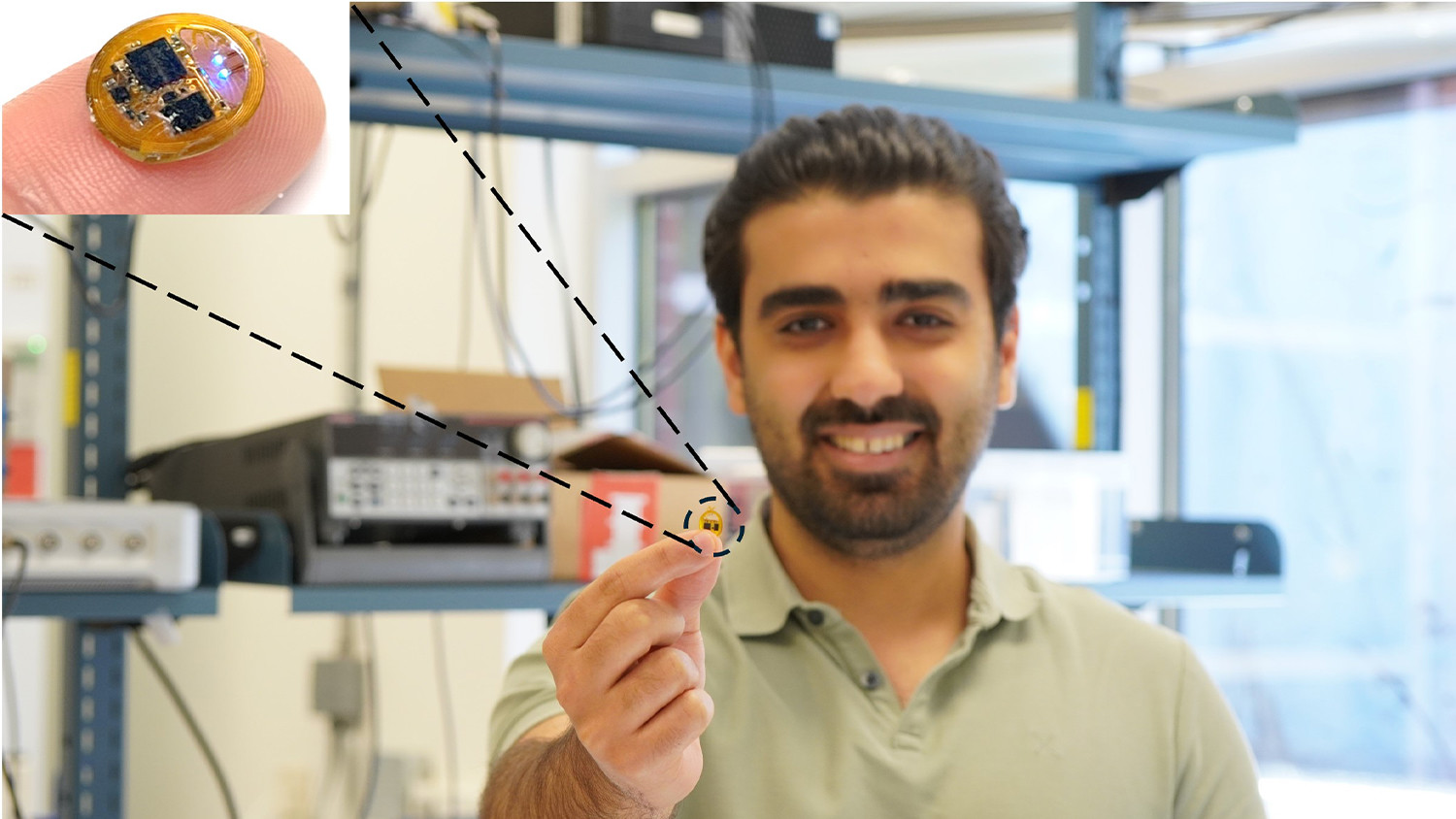
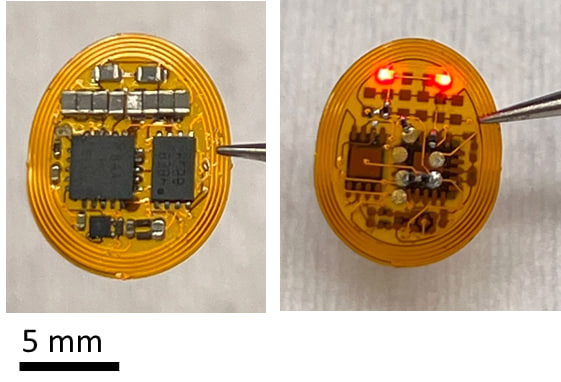
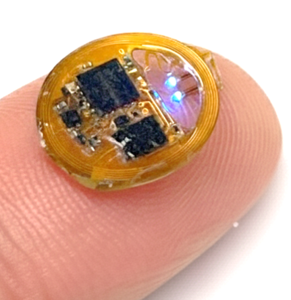
NFC-powered implants and patches that deliver light to the brain and gut of freely moving animals, built with Northwestern University. This device family is behind three of my co-authored papers.
A soft, wireless, battery-free patch whose μ-LED array delivers patterned light through the skull — work with Northwestern University published in Nature Neuroscience (2025). In the demo, the array plays Tetris to show pixel-level control.
My part: the custom NFC control electronics and ATtiny84 firmware that drive the array at variable intensities.
Battery-free NFC optogenetics, phase-locked across two brains
A wireless implant platform that synchronizes light stimulation across two freely moving mice, switched in closed loop by real-time pose tracking. Built with Northwestern University.
47 of 57 devices phase-locked within 2.5 mHz at ≤0.1% jitter
Low-power wireless electronics for reading chemistry in real time.
Electrochemical sensing
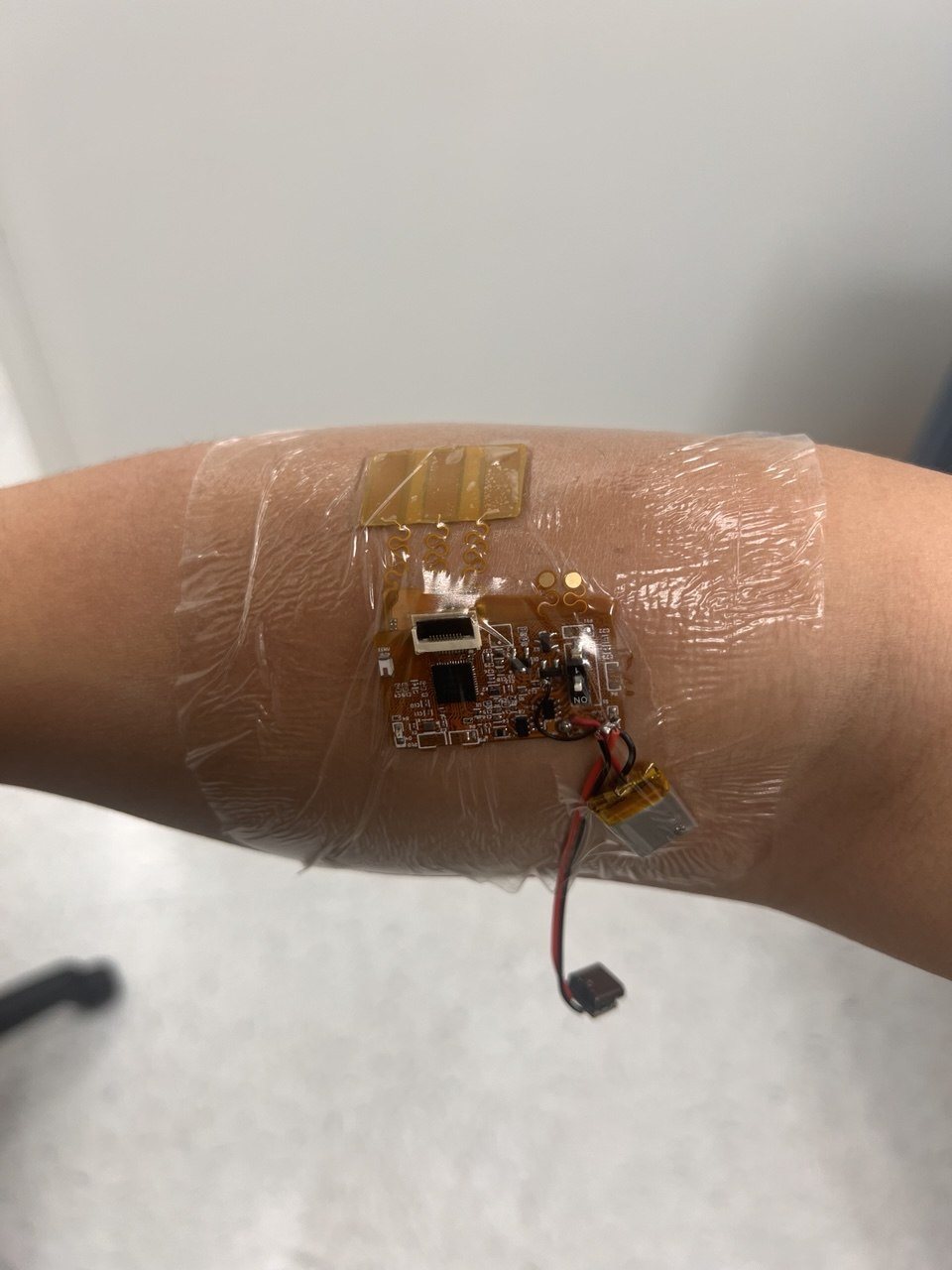
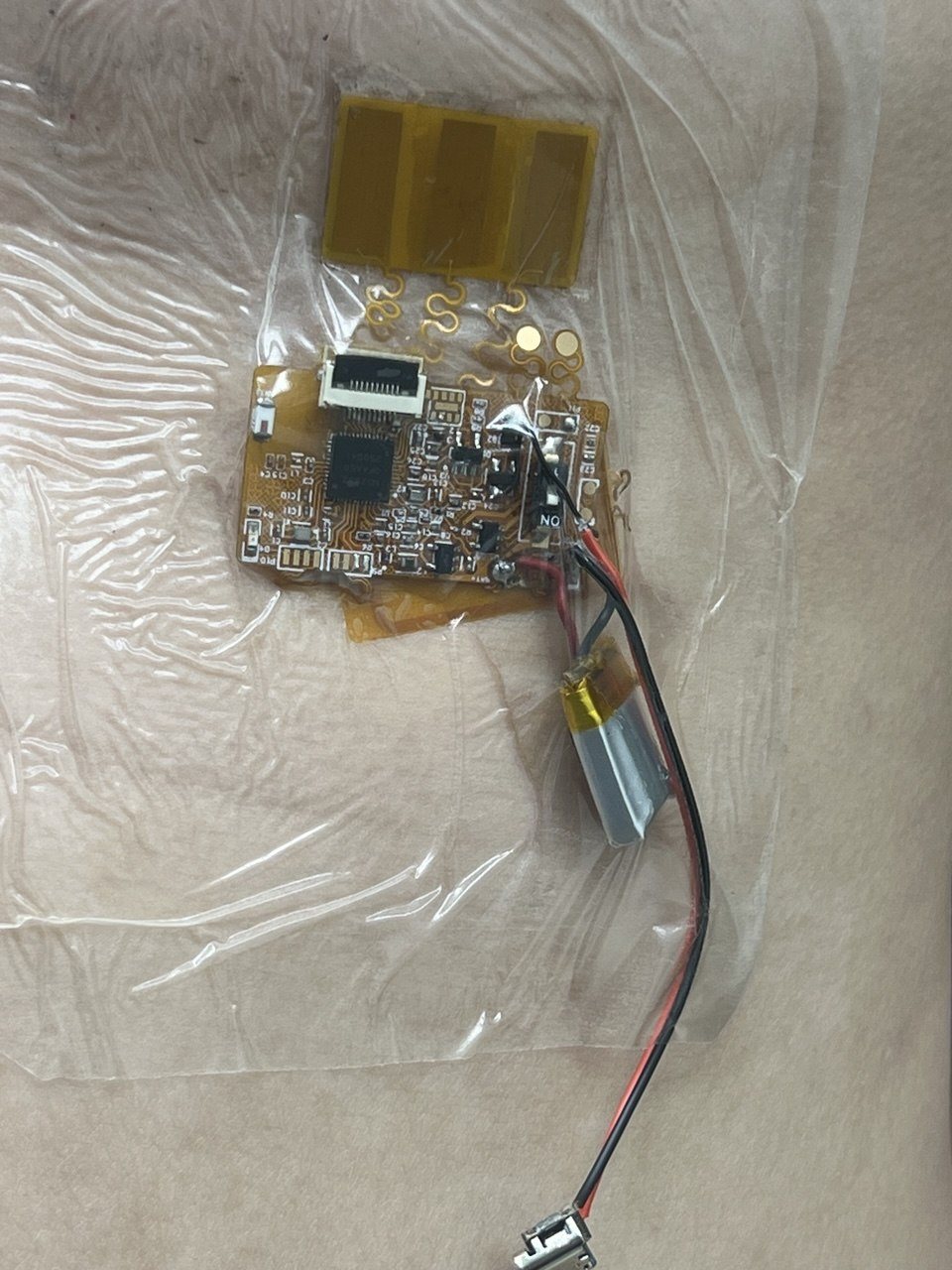
Wireless multi-technique potentiostat
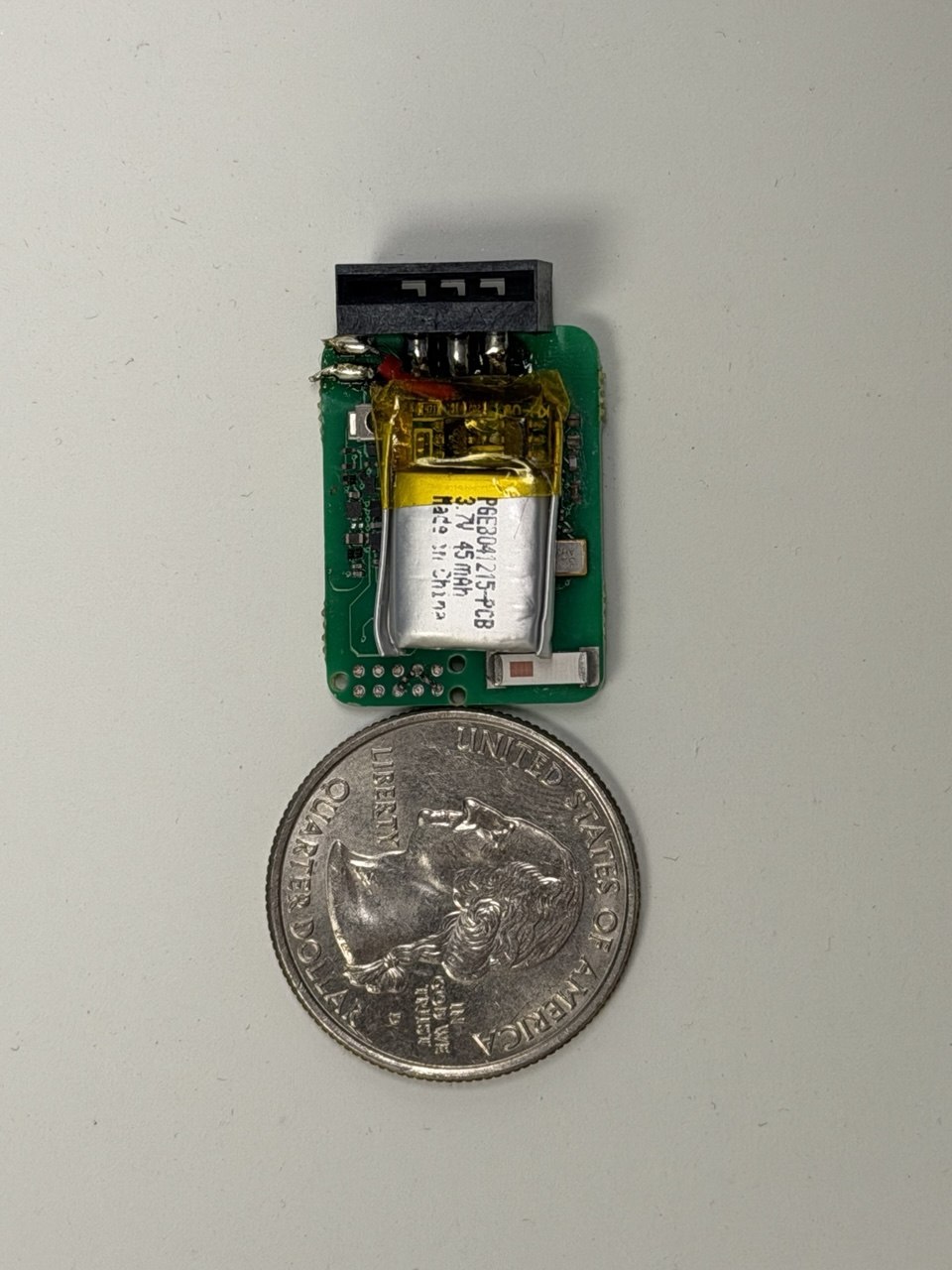
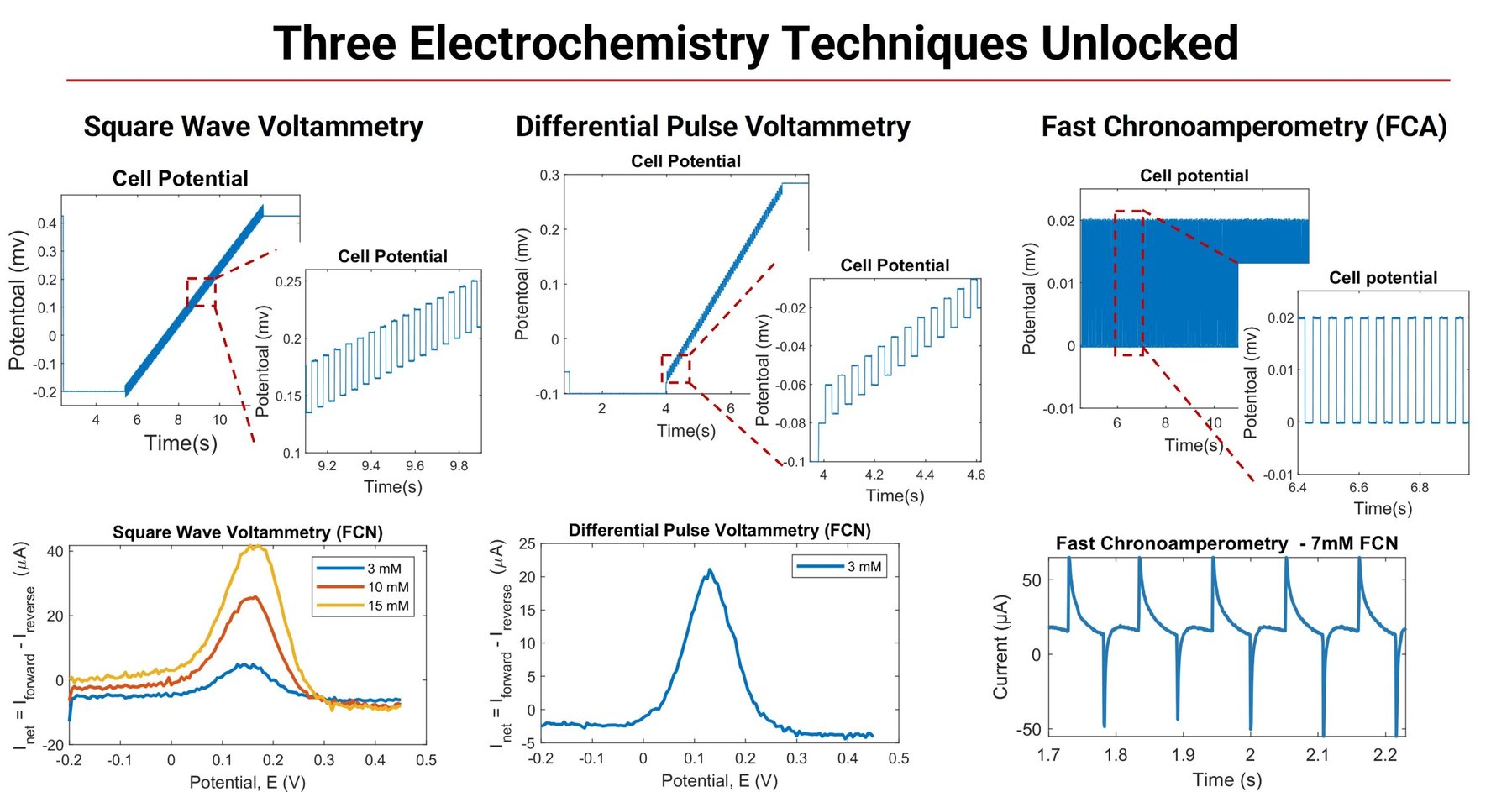
A custom nRF52840 Bluetooth potentiostat designed to run the four common electrochemical techniques: cyclic voltammetry, square-wave voltammetry, differential pulse voltammetry and (fast) chronoamperometry. Three are implemented and validated so far.
Zephyr RTOS firmware; excitation waveforms from a 16-bit DAC8831
SWV, DPV and fast chronoamperometry validated on ferricyanide (3–15 mM)
Benchmarked against a commercial potentiostat
nRF52840ZephyrBLEElectrochemistry
SWV, DPV and FCA on the board: applied cell potential (top) and ferricyanide response (bottom).
Wearable biopotential sensing
Analog front-ends and Bluetooth electronics for ECG and EMG on the body.
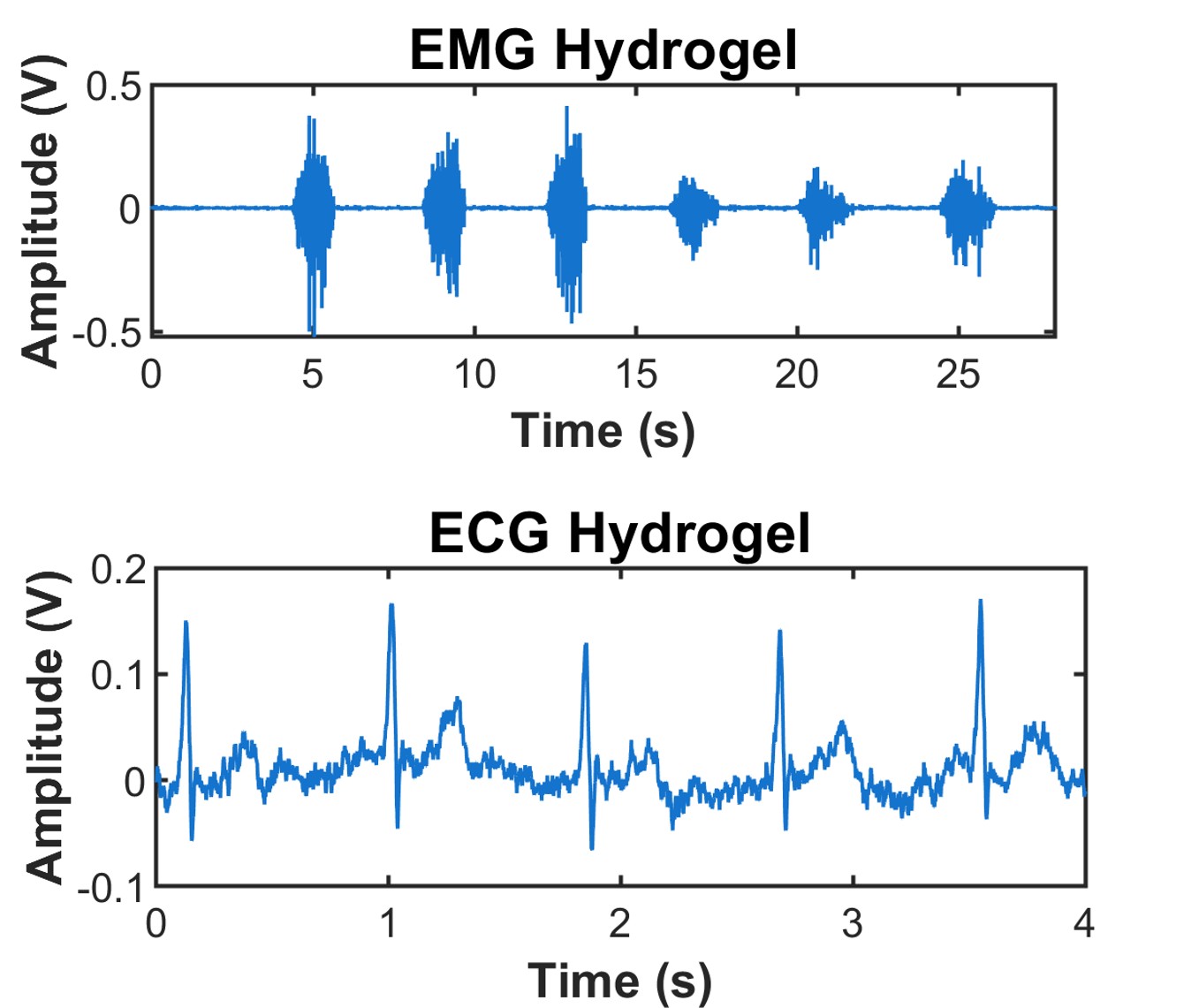
Recorded with the hydrogel electrodes: EMG bursts from repeated fist clenches (top) and ECG (bottom).
Low Power ECG/EMG Modules with On-Board Electrodes
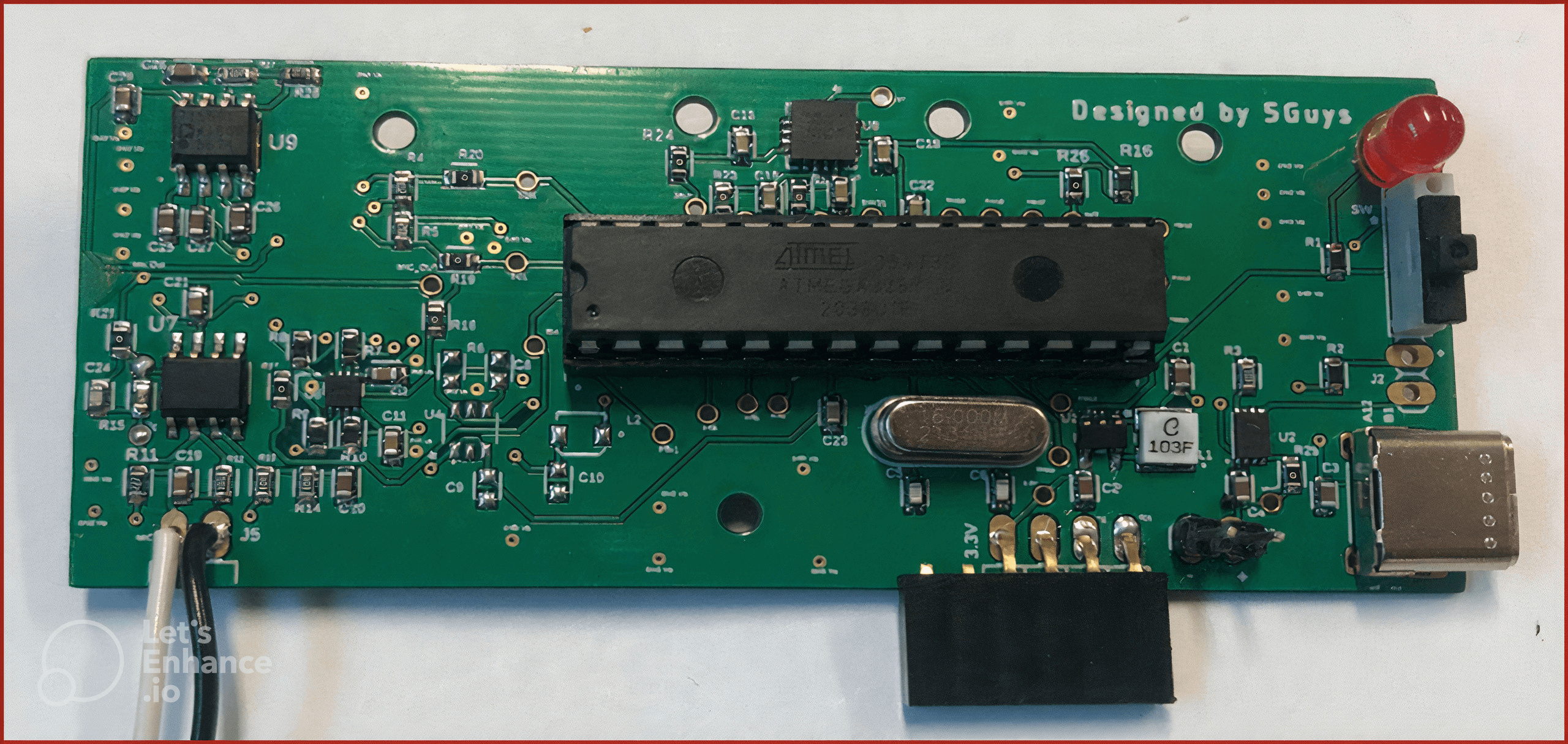
ExG modules built for Dr. Ni’s lab from Duke University: an INA333 amplifier at 1000× gain, driven-right-leg noise reduction, custom hydrogel–copper electrodes and nRF54 BLE. In the clip, a fist clench shows up as a live EMG trace.
INA333DRLnRF54Analog front-end
Wearable biopotentials
Earlier projects
Earlier work, from my undergraduate senior design.
Senior design, 2022 · Provisional patent draft
SmartSwaddle infant vital-sign monitor
A sensor pod in a fabric swaddle that streams heart rate, SpO₂, temperature, breathing, lung sounds and sleep position over Bluetooth, with alarms on a MATLAB monitor. Built by a five-person team for SIDS prevention.